
About Us

Image
Systems
Image
Systems
Content Wrapper
Text Components Section

What is the EMG?

Page Content Text

The United Nations Environment Management Group (EMG) is an interagency coordination body that brings together UN entities to address environmental and human settlement issues. It strengthens coherent UN system support to Member States in tackling the triple planetary crisis of climate change, biodiversity loss and pollution.

Established in 2001, the EMG followed the General Assembly’s adoption of resolution 53/242 in July 1999, supporting the Secretary-General’s proposal in his report on Environment and Human Settlements (A/53/463).
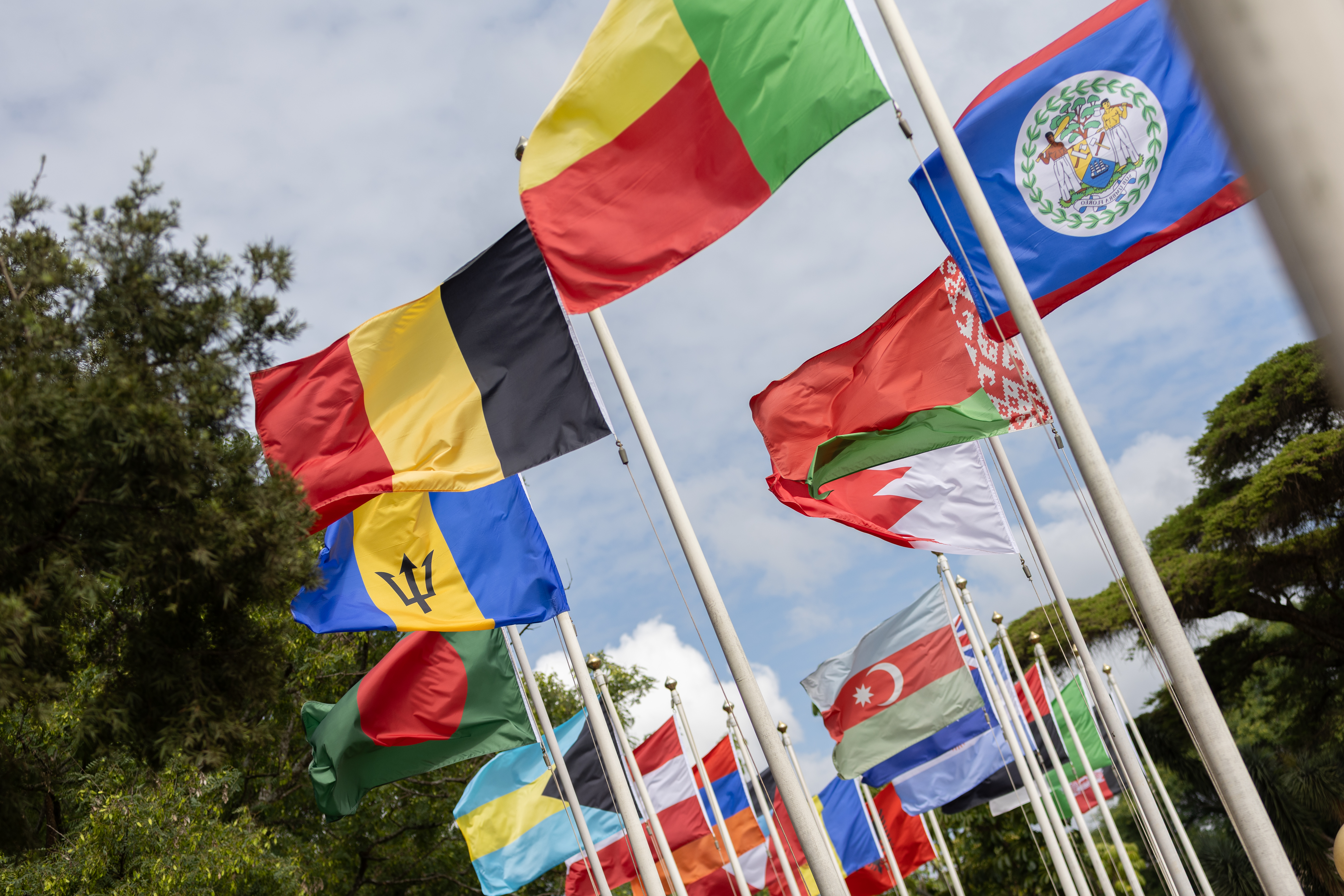
Image Section
Image
EMG_cropped
Content Wrapper

What does the EMG do?

Page Content Text

The EMG brings together its members’ expertise to develop UN Common Approaches, system-wide strategies and practical implementation tools. It facilitates knowledge sharing, conducts mappings and gap analyses, and builds multistakeholder coalitions. These activities help connect expertise across sectors, avoid duplication and identify opportunities for joint action.

By strengthening coordination among UN entities at the global level and connecting this work with regional and country-level needs, the EMG helps translate shared environmental priorities into more coherent support to Member States on the ground.

The EMG also advances the UN system’s corporate environmental sustainability agenda, supporting its members in integrating environmental considerations into their policies, programmes and management practices.

Content Wrapper

How is the EMG organized?

Text Components Section
Page Content Text

The EMG brings together its member entities through Senior Officials, who provide strategic direction, and Focal Points, who coordinate contributions to its work streams.

A Secretariat provided by UNEP and located in Nairobi, Kenya, supports the Group. The Director of UNEP’s New York Office serves as the EMG Secretary.


Image Section
Image
UN flags at Gigiri Complex
Content Wrapper

How does the EMG engage with Member States?

Page Content Text

The EMG is an inter-agency coordination mechanism, but its work is also communicated to Member States through established UN governance channels.

UNEP reports to the United Nations Environment Assembly (UNEA) on the work of the EMG as part of the follow-up to UNEA resolution 1/11 on coordination across the United Nations system in the field of the environment, including the Environment Management Group. The resolution specifically addresses UN system-wide environmental coordination and the role of the EMG.

Regular updates on the EMG’s work are also provided to UNEP’s Committee of Permanent Representatives (CPR), providing Member States with opportunities to receive information and exchange views on EMG activities and UN system-wide environmental coordination.

In addition, EMG member entities are encouraged to communicate relevant EMG outcomes and results to their own governing bodies, as appropriate.

Content Wrapper

Continuous improvement

Page Content Text

Since the EMG's establishment, the Group has undergone several reforms to address the evolving coordination challenges and respond to the emerging and intensifying global environmental issues. In 2015, the EMG conducted and produced the report “Maximising the Effectiveness of the EMG in the Context of the 2030 Agenda for Sustainable Development”. Following this, the EMG implemented the report’s recommendations and updated the EMG Terms of Reference. Between 2018 and 2022, the EMG project underwent an evaluation of its relevance, effectiveness, efficiency and sustainability. The findings and recommendations from this evaluation were published in 2023 and reviewed by EMG members in 2024 for implementation in the coming years.