In July 2020, the EMG convened a three-part virtual Nexus Dialogue series exploring the interconnected environmental, social and economic impacts of the COVID-19 pandemic and opportunities to build a more sustainable and resilient future.
Bringing together experts from across the UN system and other international organizations, the series examined how the pandemic was affecting progress towards the Sustainable Development Goals (SDGs), while highlighting opportunities for stronger international cooperation, integrated policymaking and innovative solutions.
The dialogues addressed three interconnected themes: the challenges of managing pollution and waste during the pandemic; opportunities to build back better through sustainable economic recovery, green jobs, nature-based solutions and resilient food systems; and the interdependencies between human health, environmental protection and systemic resilience.
The series comprised three virtual dialogues:
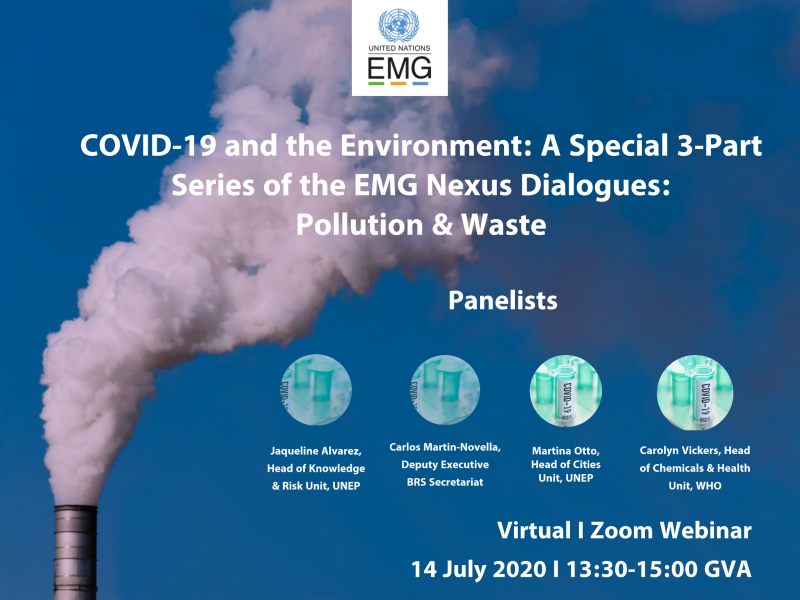
- Pollution & Waste (14 July 2020): Examining the pandemic's impact on waste management, including medical and plastic waste, and identifying opportunities to strengthen institutional capacities, circular economy approaches and sustainable financing.
- Building Back Better – a Sustainable Future (15 July 2020): Exploring how recovery efforts could advance sustainable development through green economic policies, resilient food systems, sustainable trade, decent jobs and investments in nature.
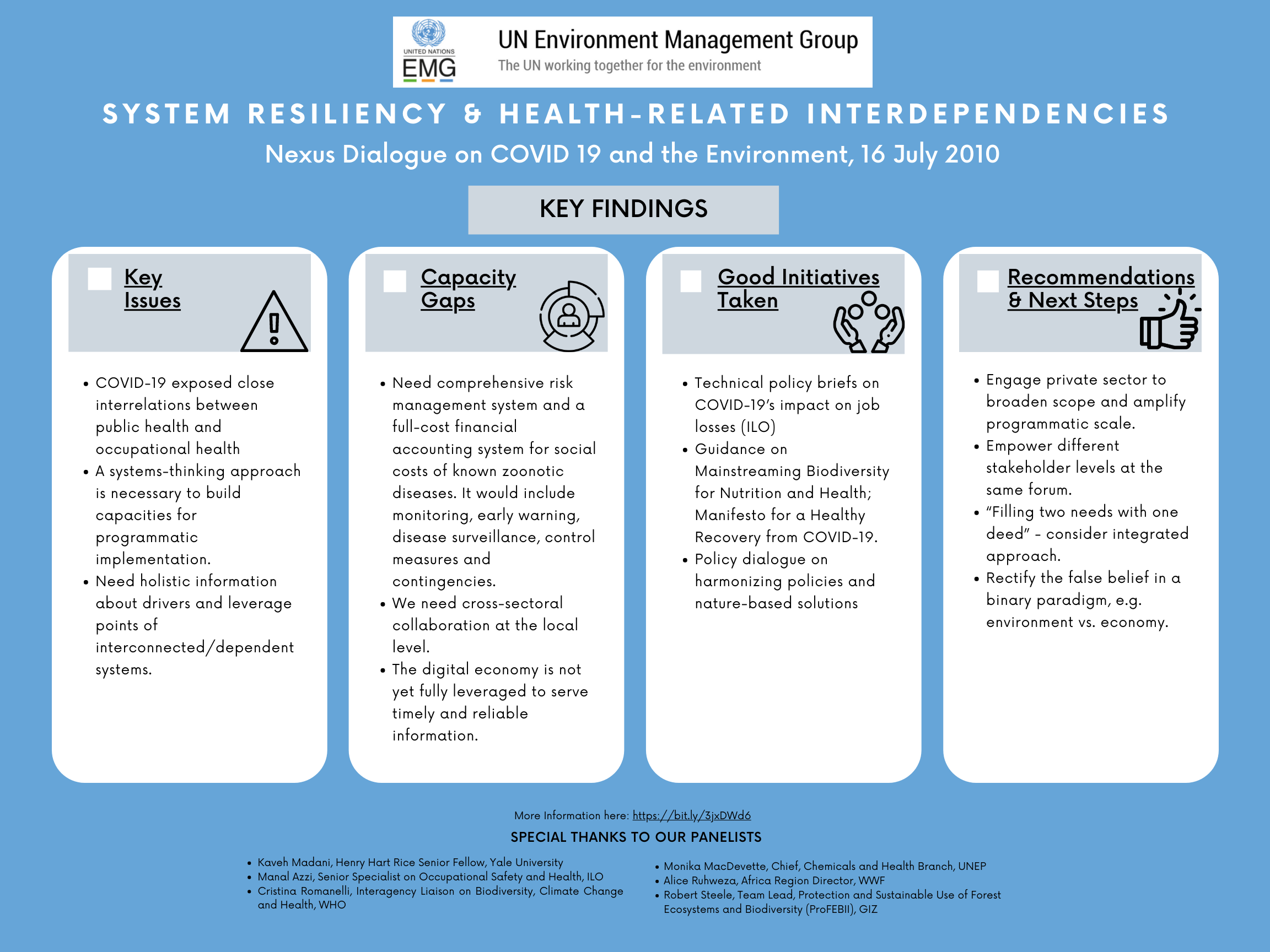
- System Resiliency & Health-Related Interdependencies (16 July 2020): Highlighting the connections between human health, biodiversity, environmental change and economic resilience, and the importance of integrated, cross-sectoral approaches to preventing and responding to future crises.
The series underscored the importance of moving beyond fragmented responses to global challenges, emphasizing that environmental protection, public health and economic recovery are mutually reinforcing. Participants called for stronger science-based policymaking, inclusive stakeholder engagement and coordinated action across the UN system to advance a more resilient and sustainable future.
Pollution & Waste
14 July 2020 14:00
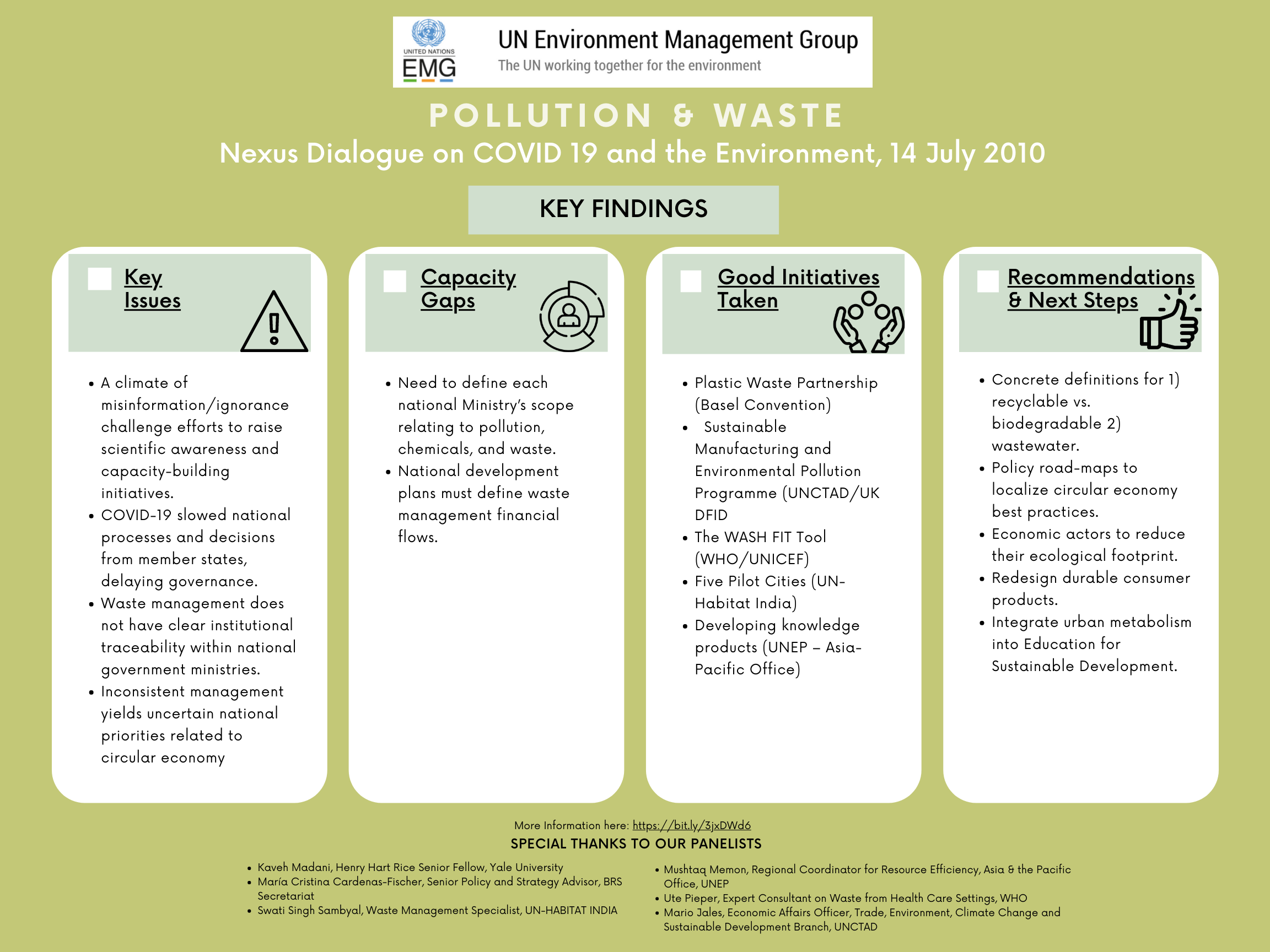
Pollution & Waste
The Basel, Rotterdam and Stockholm Conventions
United Nations Human Settlements Programme
World Health Organization
United Nations Conference on Trade and Development
United Nations Environment Programme
The first dialogue in the EMG Nexus Dialogue series COVID-19 and the Environment explored the environmental challenges arising from the pandemic, with a particular focus on pollution, waste management and opportunities to advance circular economy approaches.
Bringing together experts from the Basel, Rotterdam and Stockholm Conventions Secretariat, UN-Habitat, UNEP, WHO and UNCTAD, the dialogue examined the impact of COVID-19 on waste generation and management, including the rapid increase in medical, hazardous and plastic waste. Discussions highlighted institutional and regulatory gaps, limited national capacities and the need for stronger coordination and sustainable financing to address emerging pollution challenges.
Participants shared initiatives and practical solutions, including improved healthcare waste management, sustainable alternatives to plastics, resource-efficient production and circular economy approaches. The dialogue also emphasized the importance of strengthening national and local capacities, engaging the private sector and developing clear policy frameworks to support sustainable waste management.
The dialogue underscored the need to integrate pollution prevention and sustainable waste management into recovery efforts, highlighting opportunities for stronger international cooperation, innovation and investment in circular economy solutions to build more resilient and sustainable societies.
Building Back Better – A Sustainable Future
15 July 2020 14:00
Building Back Better – A Sustainable Future
Food and Agriculture Organization of the United Nations
UN Women
International Labour Organization
World Trade Organization
United Nations Development Programme
United Nations Environment Programme
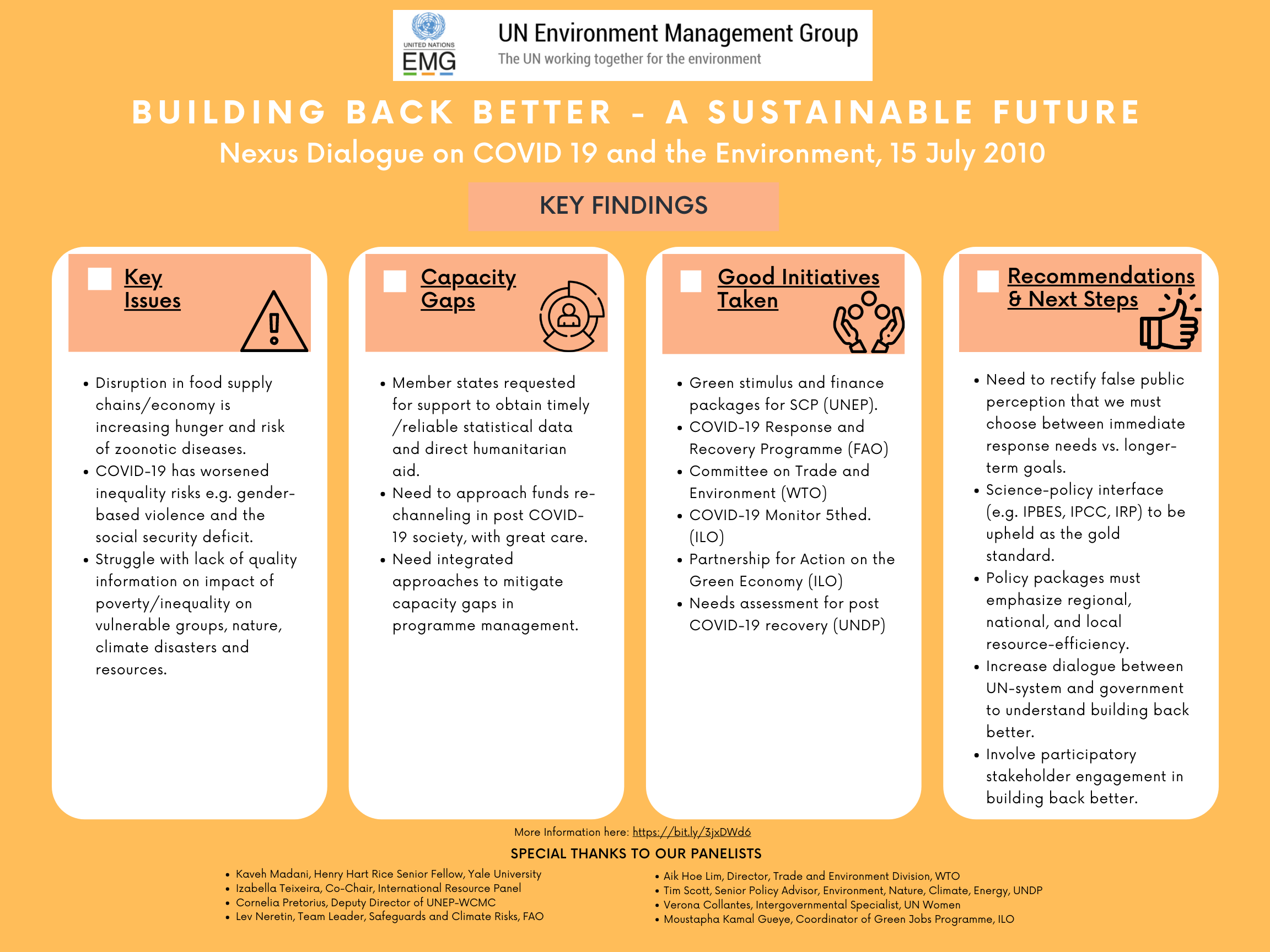
The second dialogue in the EMG Nexus Dialogue series COVID-19 and the Environment explored how the global response to the pandemic could provide an opportunity to accelerate the transition towards a more sustainable, inclusive and resilient future.
Bringing together experts from UNEP, UNEP-WCMC, FAO, WTO, UNDP, UN Women, ILO and the International Resource Panel, the dialogue examined the interconnected impacts of COVID-19 on economies, livelihoods, food systems and the environment. Discussions highlighted the need to address growing inequalities and environmental pressures through integrated recovery strategies that advance the economic, social and environmental dimensions of sustainable development.
Participants explored opportunities to build back better through green jobs, sustainable trade, resilient food systems, nature-based solutions, resource efficiency and responsible public and private investment. Particular emphasis was placed on strengthening science-based policymaking, supporting vulnerable communities and aligning economic recovery measures with the Sustainable Development Goals.
The dialogue emphasized that economic recovery and environmental sustainability are mutually reinforcing objectives. It called for coordinated, inclusive and evidence-based approaches that move beyond short-term crisis responses to build more equitable, productive and environmentally sustainable economies.
System Resiliency & Health-Related Interdependencies
16 July 2020 14:00
System Resiliency & Health-Related Interdependencies
International Labour Organization
WWF (Observer)
United Nations Environment Programme
World Bank Group
The third and final dialogue in the EMG Nexus Dialogue series COVID-19 and the Environment explored the interconnections between human health, environmental change and the resilience of social and economic systems, drawing lessons from the COVID-19 pandemic.
Bringing together experts from ILO, WHO, UNEP, WWF and GIZ, the dialogue examined how the pandemic exposed vulnerabilities across interconnected systems, including public health, occupational safety, biodiversity, natural resource management and livelihoods. Discussions highlighted the importance of understanding how environmental degradation, ecosystem disruption and zoonotic disease risks interact with wider social and economic challenges.
Participants emphasized the need for integrated approaches to risk management, stronger scientific information and early-warning systems, and closer collaboration across sectors and institutions. The dialogue also explored the role of nature-based solutions, local communities, civil society and the private sector in strengthening resilience and addressing the underlying drivers of environmental and health risks.
The dialogue underscored that healthy ecosystems, human wellbeing and economic resilience are fundamentally interconnected. It called for a systems-thinking approach to policymaking and international cooperation, recognizing that integrated solutions can simultaneously advance environmental protection, public health and sustainable development.